Unicare

Designing a healthcare ecosystem for Canada's most pressing crisis.

Go to results

A system failing from every angle.

My mother is a registered nurse who burned out mid-pandemic and retired early. She's one of the hardest people I know. That raised questions I couldn't ignore about what was breaking down behind the scenes.

I spent the next year finding out. Thirty-two scholarly articles. Twenty-six public interviews. Year-long conversations with two retired nurses holding eighty combined years of experience. What I found: 94% of nurses reporting burnout symptoms, ER wait times surging 54% year-over-year, patients waiting 33 hours for a bed in Ontario, and no national system anywhere for hospitals to share what they'd learned.

One ecosystem, three products

Instead of a single tool for a single user, I designed an interconnected platform. A patient portal, a bedside decision-support app, and a management dashboard, all pulling from the same data backbone. Improvement in one creates relief across all three.
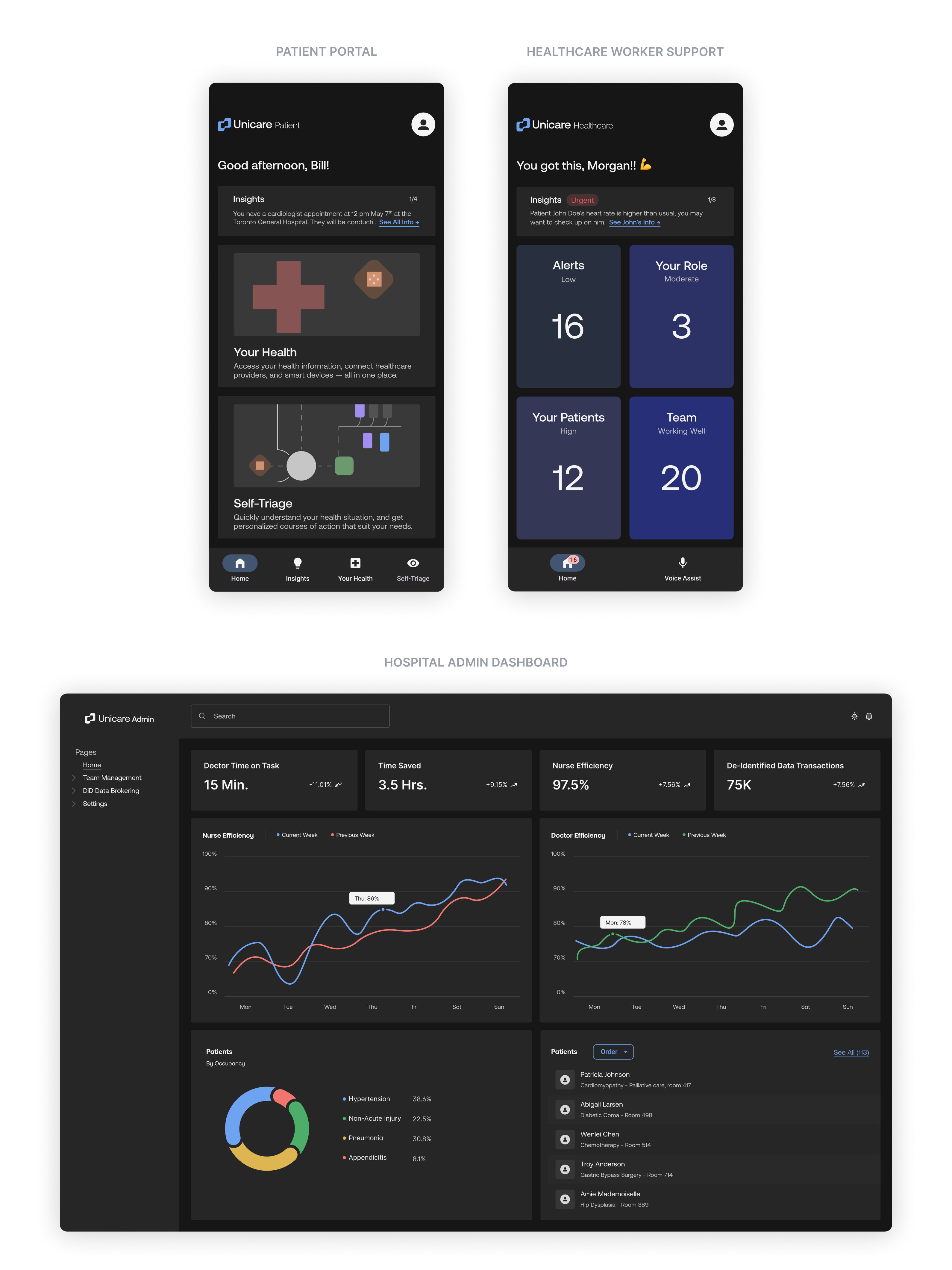
One ecosystem, three products — interconnected platform diagram

Three products connect across patients, healthcare workers, and hospital management.
A co-pilot for healthcare workers.

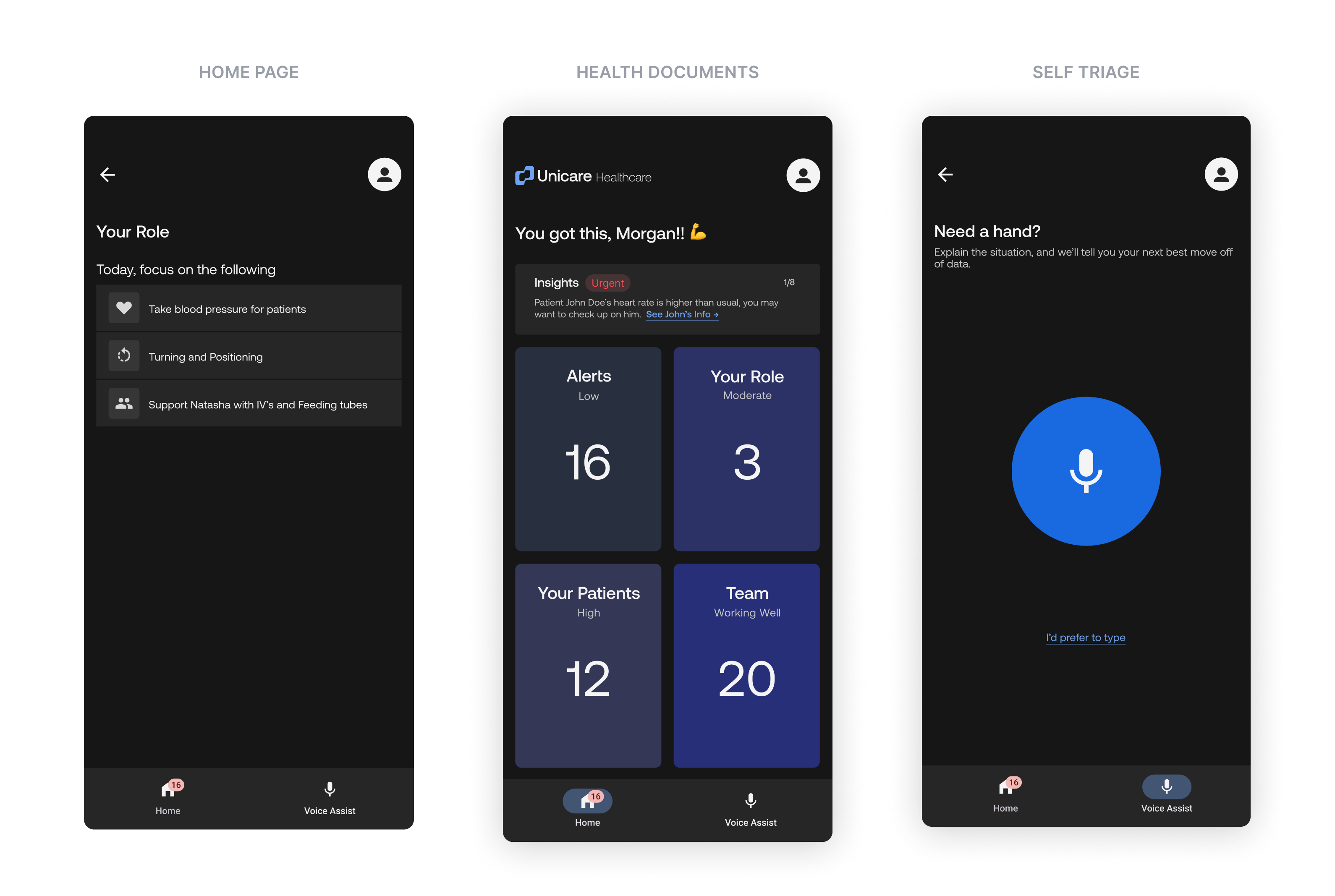
The research pointed consistently to team-based care: distribute tasks by skill, not hierarchy. I built the bedside app around a daily huddle, workers assign roles at shift start, then get AI-powered guidance throughout. Every recommendation surfaces its reasoning so clinical autonomy stays intact.

Voice assist handles the reality that healthcare workers' hands are rarely free.

Bedside decision-support app — home screen

Home screen surfaces alerts, role assignments, patient load, and team status at a glance.

Give patients the context to stop using the ER as a first resort.

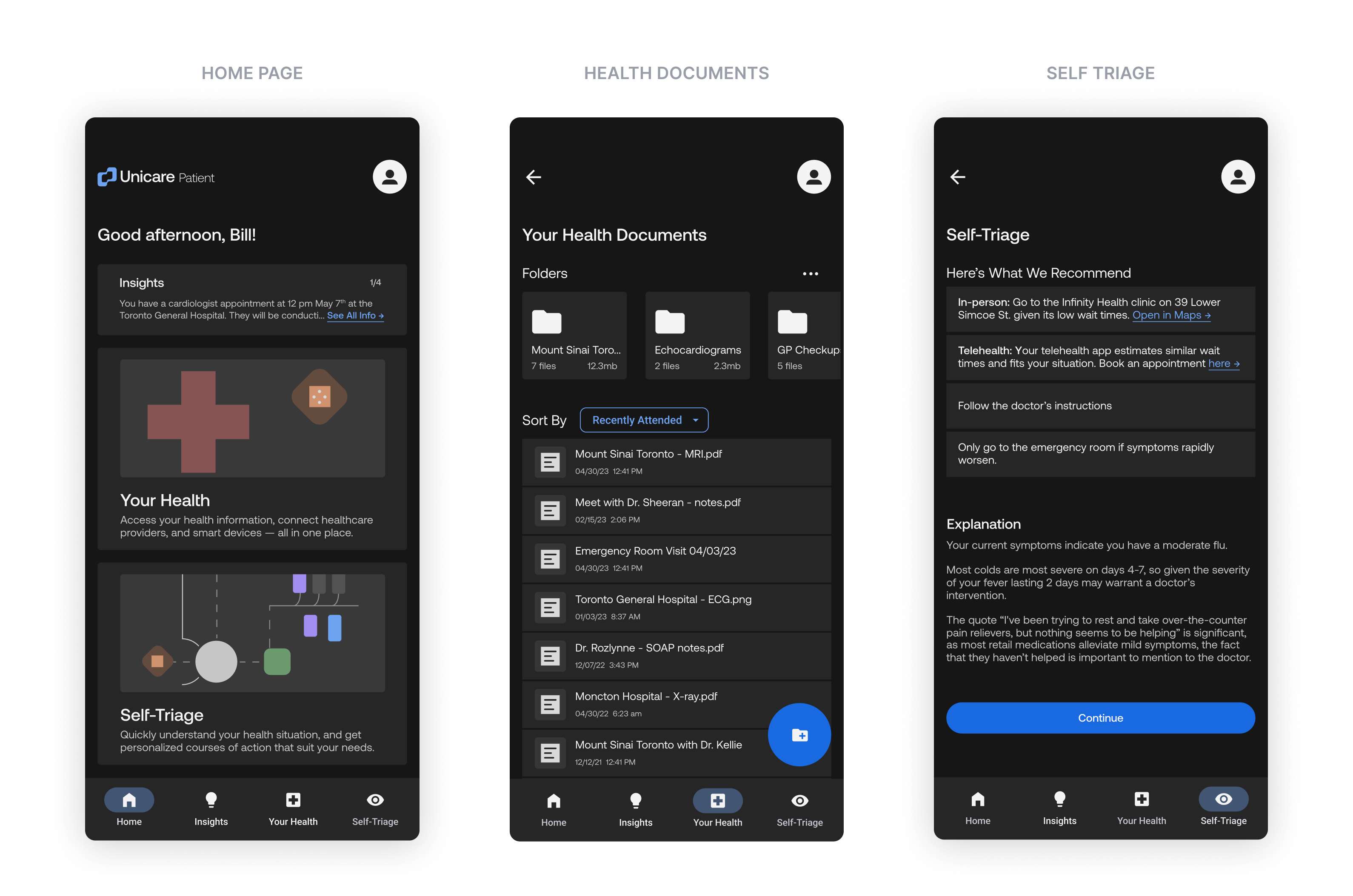
Patients weren't misusing the ER out of laziness, they had no other way to understand what was happening with their health. The patient portal gives them records, connected device data, appointment context, and a self-triage flow: describe symptoms, answer targeted questions, get a recommended course of action.

Patient portal — self-triage flow from symptoms to recommended care pathway

Self-triage walks patients from symptoms to a recommended care pathway based off of their health records, symptoms, and severity.

Turn trapped hospital data into shared intelligence.

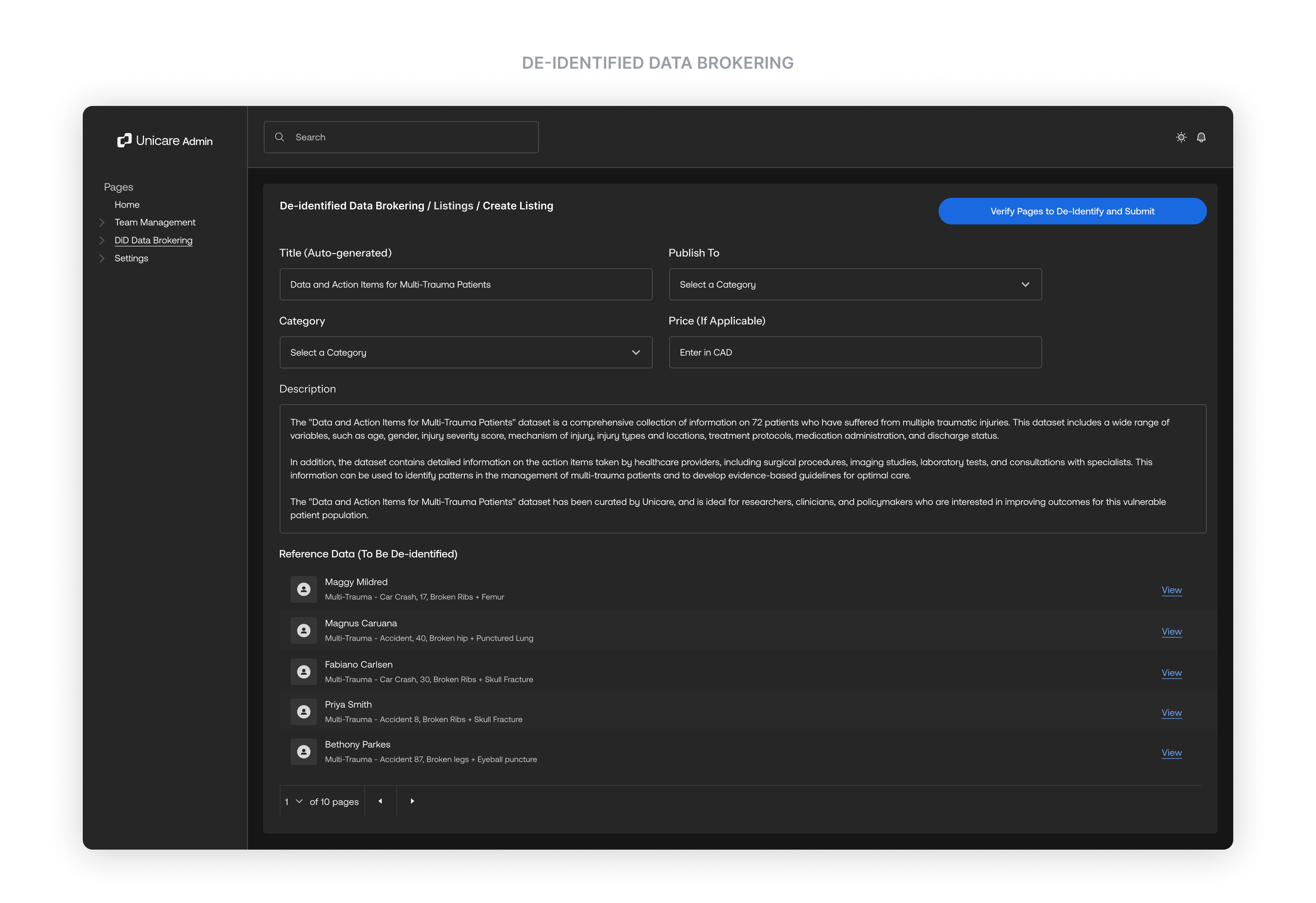
The most striking finding from the research: when a hospital solves a hard problem, that knowledge stays local. No national system exists to share it. The admin dashboard surfaces real-time team efficiency, but it also enables de-identified data brokerage — hospitals anonymize operational data and share or sell it to research organizations.

Management dashboard — nurse efficiency, doctor time on task, and data brokerage

Management dashboard showing nurse efficiency, doctor time on task, patient types, and de-identified data transaction volume.

Results
ACIDO Rocket Finalist: selected from hundreds of Industrial Design students in Ontario, nominated by thesis professor Alex Manu.
Three prototyped products validated across five stakeholder groups through card sorting, empathy mapping, value proposition canvases, and subject matter expert review.
Metrics I'd track post-launch
ER misuse rates before and after patient portal adoption: the primary usage outcome.
Revenue from de-identified data brokerage as sustainability signal for hospital adoption.